Meeting Summary Formats for Different Meeting Types
Tailor your meeting summary format to what actually happened, not what all meetings have in common.
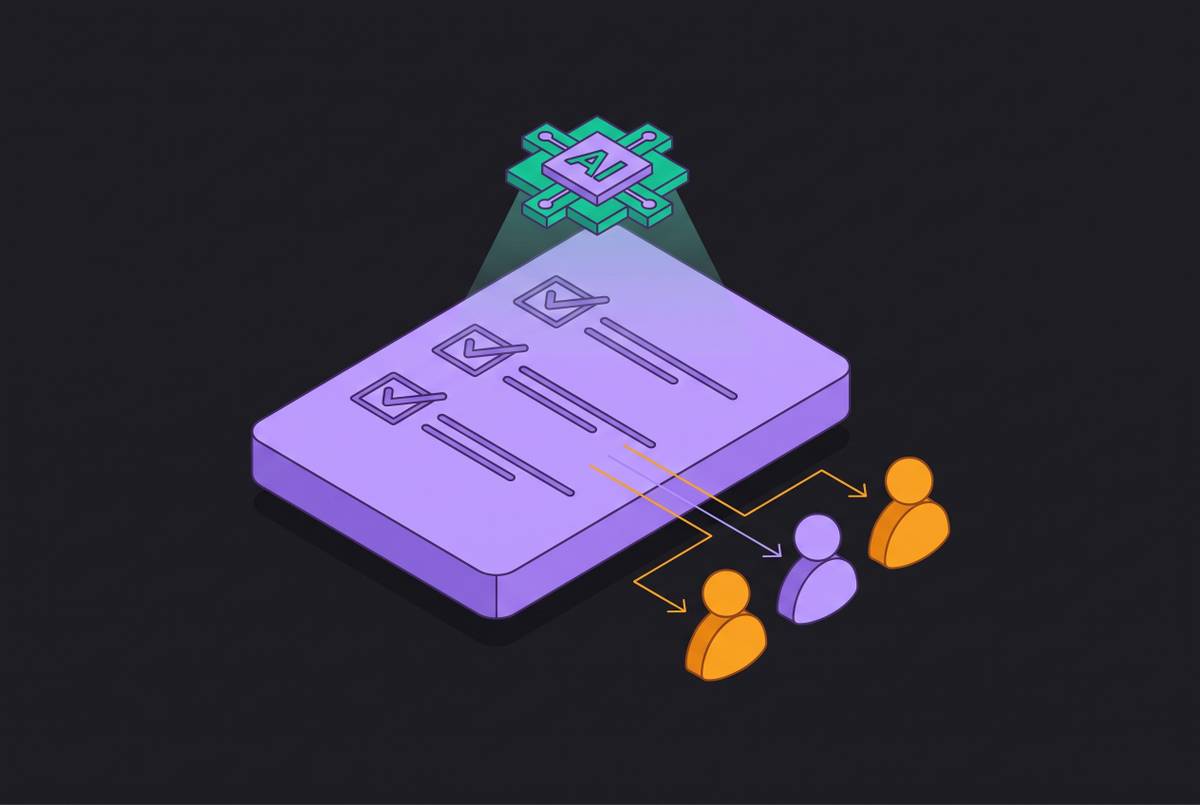
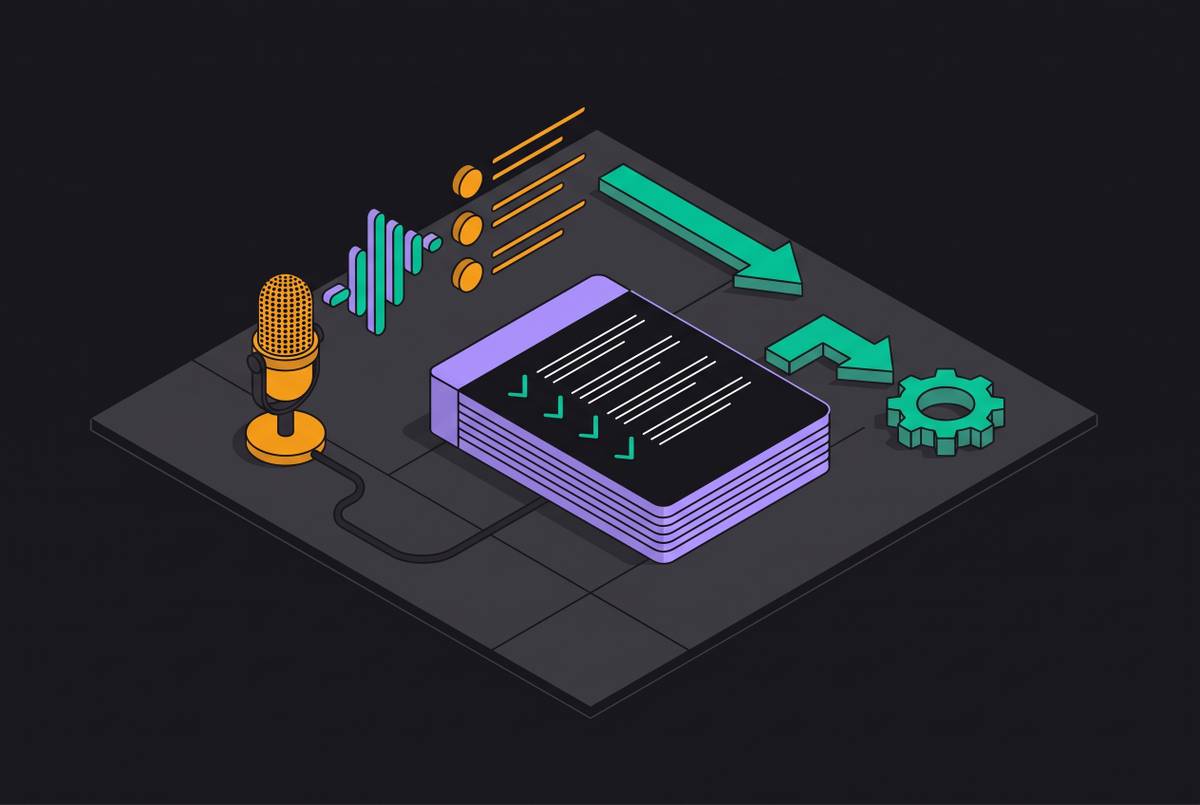
Most meeting summaries fail before anyone reads them. A standup summary formatted like board minutes buries the one blocker that needed action this morning. A strategy session summarized as a list of decisions loses the unresolved questions that were its actual output. The technology that captures meeting notes has solved the transcription problem, but transcription was never the real problem. Structure was, and structure is a format question, not a technology question.
Why a single summary format fails most meetings
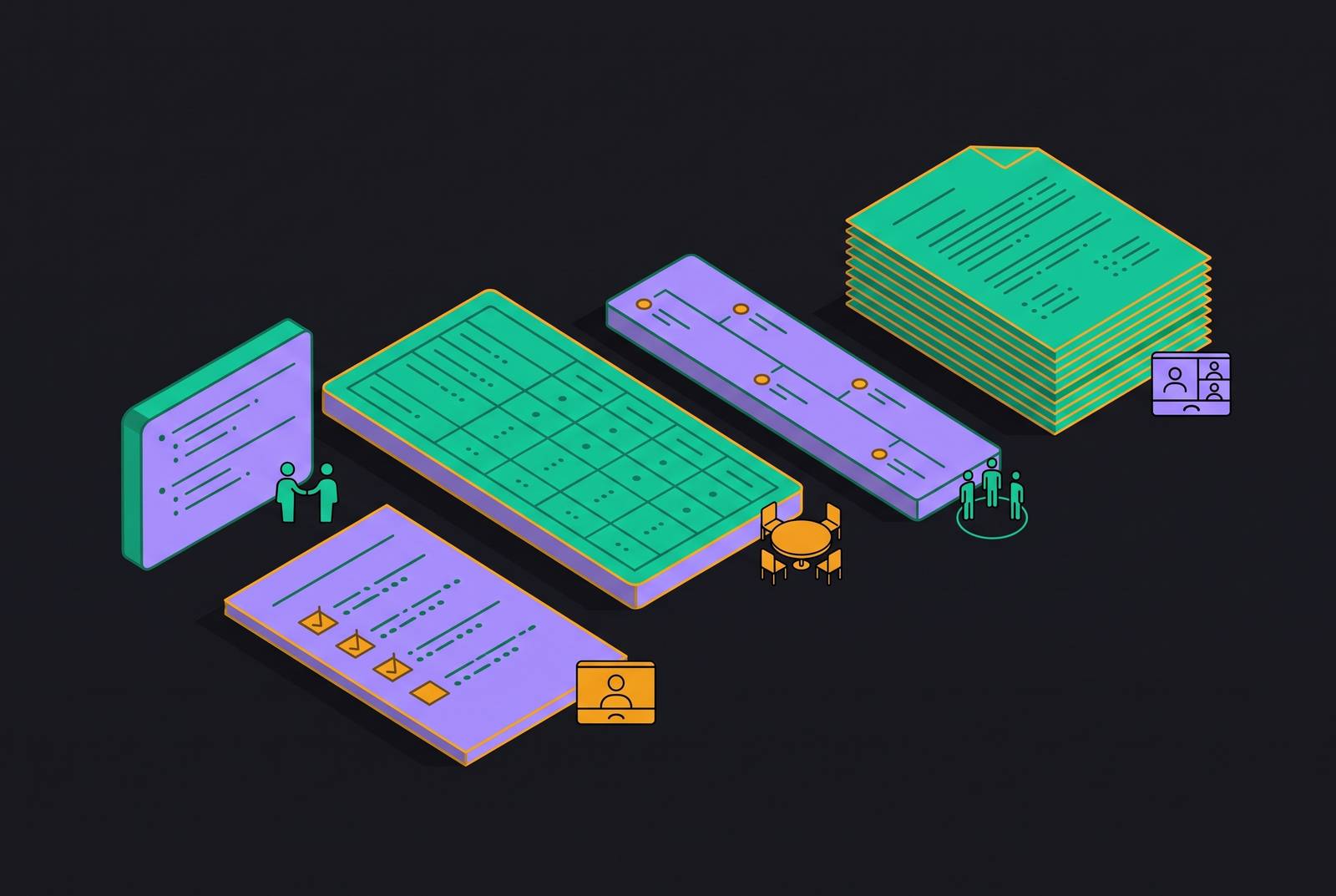
When a summary logs everything equally, regardless of what kind of meeting generated it, the reader must do the editorial work the format should have done. Different meeting types generate structurally different information. None of these map cleanly onto the same five-section default.
The practical consequence follows directly from the mismatch. What remains looks complete and organized, which is worse than looking incomplete. A well-formatted summary that omits the most important output reads as authoritative, and nobody goes looking for what they don't know is missing.
The assumption embedded in most template defaults is that all meetings produce the same kind of information in roughly the same proportions. A team that uses one format for everything will systematically misrepresent its standups, its strategy sessions, or both, and the people who rely on those summaries will learn to distrust them, or worse, to spend their time reconstructing what happened through direct messages and hallway conversations. The format problem compounds quietly: each inadequate summary costs every reader a few minutes of search and clarification, and across a team attending dozens of meetings a week, that cost is material.
The universal skeleton that every meeting summary should start from
The solution is not to abandon shared structure but to ground it in something more fundamental: a universal skeleton that every summary starts from, then modifies according to the meeting type. A closing section notes the next meeting or next steps. A short header identifying the meeting, date, and attendees sits above all of it.
The ordering carries meaning. They scan for what they must do, then for what they should know, then for what remains open. A format that respects that reading pattern gets used. One that fights it gets skimmed or abandoned.
Length should track the length of the meeting. The goal in both cases is identical: give someone who missed the call what they need to stay aligned, without burying them in detail they will not use. The skeleton is the baseline, not the answer. The variations differ because the meetings differ, and recognizing that difference is the entire point.
Standups and team syncs: lead with blockers, keep everything else minimal
Standups and weekly syncs almost never produce decisions. The right format for a standup is a lean variant of the skeleton that inverts its priorities. Close with any action items that emerged from the conversation.
The sections that dominate other formats can collapse or disappear entirely here. Leaving it blank is fine and honest. Forcing a decision entry creates noise, and noise is what the format exists to eliminate.
The discipline is length. A standup summary should fit in a half-page or less, and if it does not, the meeting rather than the notes is the problem. This is the simplest format case, and it introduces the principle that governs all the others: lead with what requires action, compress what does not. For recurring standups, the archive of summaries becomes a lightweight project log, a searchable record of who was blocked on what and when it resolved. That archive is useful for retrospectives and onboarding, but only if each entry is clean and navigable, which is precisely what the lean format delivers.
1:1 meetings: capture commitments and forward intent, not discussion
A 1:1 summary is mostly private and forward-looking, which changes its center of gravity. Decisions are rare in 1:1s and should not occupy the leading position they hold in other formats. The most useful structure separates commitments per person, clearly partitioned so each participant can see their own obligations at a glance, then adds any feedback or development themes that came up, then closes with a forward section noting what to pick up next time. Key discussion points should be minimal. Open questions, by contrast, are worth capturing, because in a 1:1 context they often represent the agenda for the next meeting, a parking lot that carries forward and gives both people a place to start when they reconvene.
Sharing and storage matter here more than in any other meeting type. Access controls and retention policies apply, and they should be configured before the first 1:1 is captured, not retrofitted after someone realizes the implications of a shared drive containing months of personal conversations. The downstream purpose of a 1:1 summary is fundamentally different from that of any shared-channel note, and the format must reflect that difference from the first line.
Strategy and planning sessions: make the unresolved as visible as the resolved
Strategy sessions generate a large volume of discussion and relatively few firm decisions. In a strategy context, unresolved items are productive outputs. A structured list of open questions with owners and target-resolved dates is what turns a good discussion into forward motion, and the format must treat it as such.
The deferred items and open questions sections are the center of gravity for a strategy summary, not the appendix. Not just "we decided X," but "we decided X given Y constraint; this supersedes the previous approach." Strategy decisions often need to be understood months later by people who were not in the room, and the decision alone, stripped of its reasoning, is not enough to guide them.
Key discussion points matter more in strategy summaries than in standups because the reasoning behind decisions, and the options that were rejected, are often as important as the decision itself. A strategy summary typically runs longer, up to two pages for a 90-minute session, and that length is warranted. "Who will investigate X and report back by when" is as important as "who will build Y by when," and a format that treats both equally acknowledges that thinking is work.
Client and external meetings: the summary as a shared record of what was agreed
When a meeting summary will be shared with a client or external party, it becomes the official record of what was agreed. Decisions about scope, timelines, deliverables, or pricing must be stated with precision. Vague summaries of these points create the conditions for scope disputes, and sharing the summary with the client to confirm is good practice rather than excessive formality.
Action items should be clearly split, with "our team will do X by date" and "their team will do Y by date" in separate lists. Casual shorthand, internal abbreviations, and unresolved ambiguity should be cleaned up before the document leaves the building. Key discussion points should focus on what the client said they need or care about, the signal that matters most for follow-through and for briefing colleagues who were not on the call.
Open questions must be explicit and assigned. For sales discovery and follow-up calls specifically, the summary often needs to double as a CRM input, which means decisions, stated pain points, next steps, and deal-relevant context should map to fields rather than sit in a prose paragraph. The external audience changes both what the summary must include and how it must be written, and the format must answer to that audience before it answers to anything else.
How format connects to workflow: routing different summaries to different systems
A summary structured for its meeting type is also structured for its downstream system. A client meeting summary with separated bilateral actions can push each party's commitments to the right CRM record or project ticket without manual reformatting. The format is not just a reading aid. It is the input layer for automation.
Laxis's 2026 report identifies the return on investment multiplier as integration, not transcription. More capable tools map structured fields such as next steps, deal stage, qualification data, and blockers to specific CRM or project fields automatically. The latter requires structured input, which is what a well-formatted summary provides.
For sales calls, the CRM-ready format means capturing pain points, stated timeline, decision-maker, and agreed next steps as discrete items, not embedded in prose. A summary that is merely persuasive prose is an endpoint. A summary that is structured is a beginning. Custom templates by meeting type, for standups, 1:1s, strategy sessions, and client calls, can be configured so the AI produces output already shaped for the right downstream system, rather than requiring reformatting after the fact.
Consent, recording visibility, and what participants need to know before the meeting
Before any format question, there is a prior question: whether recording the meeting complies with the consent laws that apply to every participant on the call. Federal law in the US permits one-party consent, but a significant number of states require all-party consent, and a California participant on any call brings California's stricter standard with it regardless of where the other parties are located. A visible meeting bot is not legally sufficient consent. Participants seeing a bot in the room does not constitute agreement to be recorded. Explicit notice and, in all-party states, explicit agreement are required.
Illinois' Biometric Information Privacy Act (BIPA) adds a separate layer. AI note-takers that generate voiceprints for speaker identification may be collecting biometric data, which requires written consent before collection or use. GDPR does not generally recognize employer-employee consent as freely given, so for internal meetings, appropriate legal bases are typically contract performance, legitimate interest, or legal obligation, each requiring documentation. For external meetings, participants should be informed before the call begins. The bot-versus-botless choice matters here: a visible bot makes the recording more visible but does not substitute for consent, while a silent desktop recorder increases the risk of unnoticed recording. Both require the same underlying consent practice, and teams should understand the difference when choosing a capture method.
The practical steps are straightforward. Notify participants before the meeting starts. Know where recordings and transcripts are stored and for how long. Have a retention and deletion policy in place before rolling out to sensitive meeting types such as HR, legal, and client conversations. These steps do not require legal expertise to begin implementing, and they remove the foundational risk that would otherwise undermine everything the format work above is meant to achieve.
Putting it into practice: choosing and configuring formats for your meeting types
The value of matching format to meeting type is only realized if the format is configured consistently rather than reconstructed from scratch after every call. Start by mapping the recurring meeting types on the team: list the four or five formats that run regularly, and for each, identify what output it typically needs to produce, whether decisions, blockers, bilateral commitments, or open questions. The guidance in the sections above provides the framework for that identification, and the mapping itself is the first concrete step. It forces clarity about what each meeting is for, which is often clarifying in ways that extend beyond note-taking.
Configure a named template for each type in whatever AI note-taking tool the team uses. Templates should specify which sections are required, which are optional, and what the expected length is. This removes the post-meeting editing burden and standardizes what teammates receive, so that a standup summary from one person looks like a standup summary from another. For meetings that feed a downstream system, whether a CRM, a project tool, or a Slack channel, map the template sections to the specific fields or channels they should populate. The template and the integration should be designed together, not separately, because a template that produces the right structure but cannot feed the system it needs to feed is only half the solution.
Treat the AI-generated summary as a draft. The format gives reviewers a frame to edit against, and a quick two-minute review to confirm action items and decisions is faster and more reliable than reconstructing notes from memory. The format does not eliminate the human review. It makes that review efficient by giving it something specific to check. Revisit templates quarterly. Meeting types evolve, and a standup format that served a five-person team may not serve a fifteen-person team six months later. The format should serve the meeting, not the other way around, and the ongoing practice of format design is the discipline that keeps summaries useful as the organization changes around them.