Human Review Workflows for AI Meeting Notes at Scale
Catch AI meeting-note errors where they matter most.
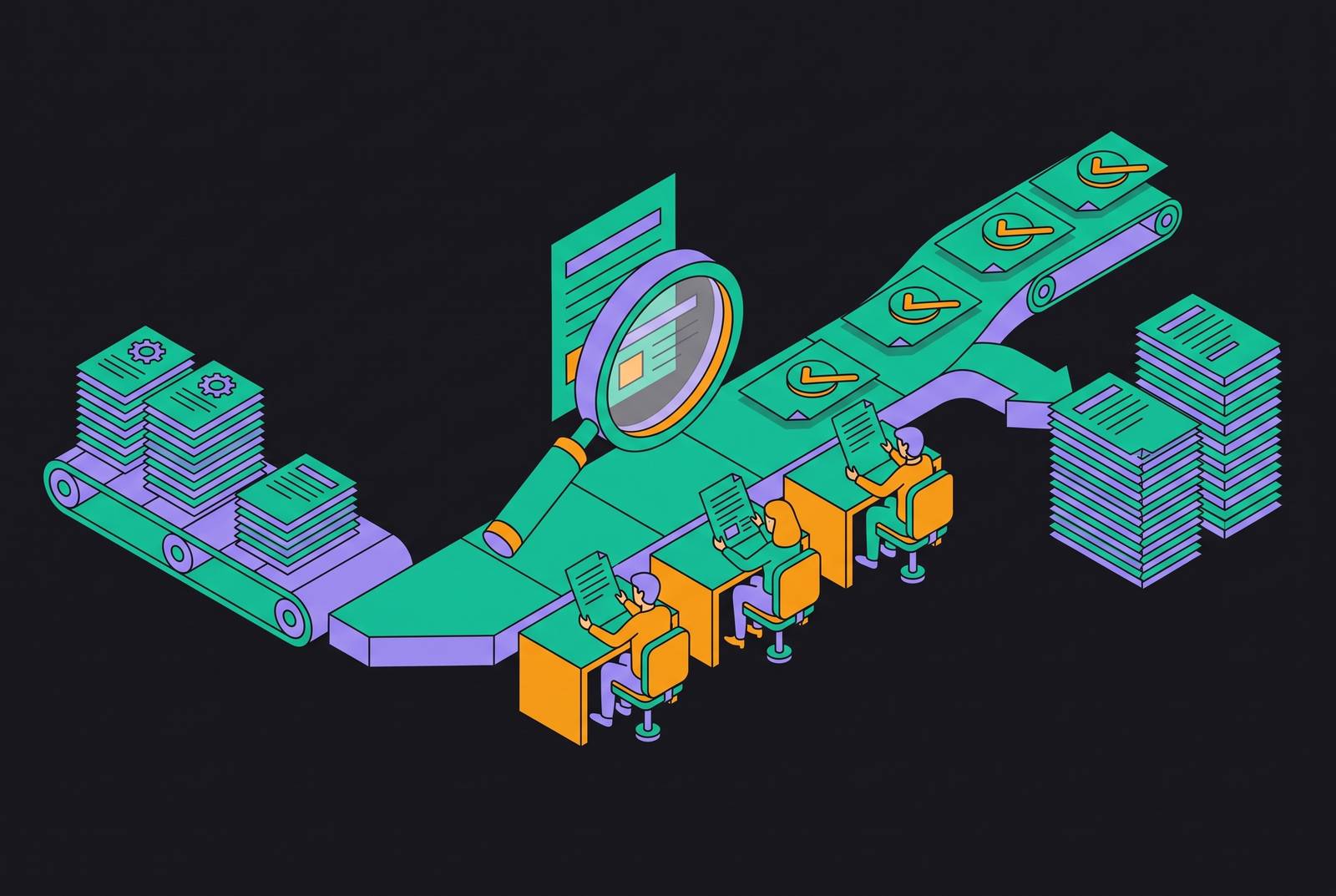
AI meeting notes need human review workflows that catch consequential errors without restoring the work of manual note-taking. At scale, teams need to classify meetings by risk, give accountable participants a narrow review task, and carry their corrections into every system where the notes are used.
Why AI meeting notes have become infrastructure rather than a convenience
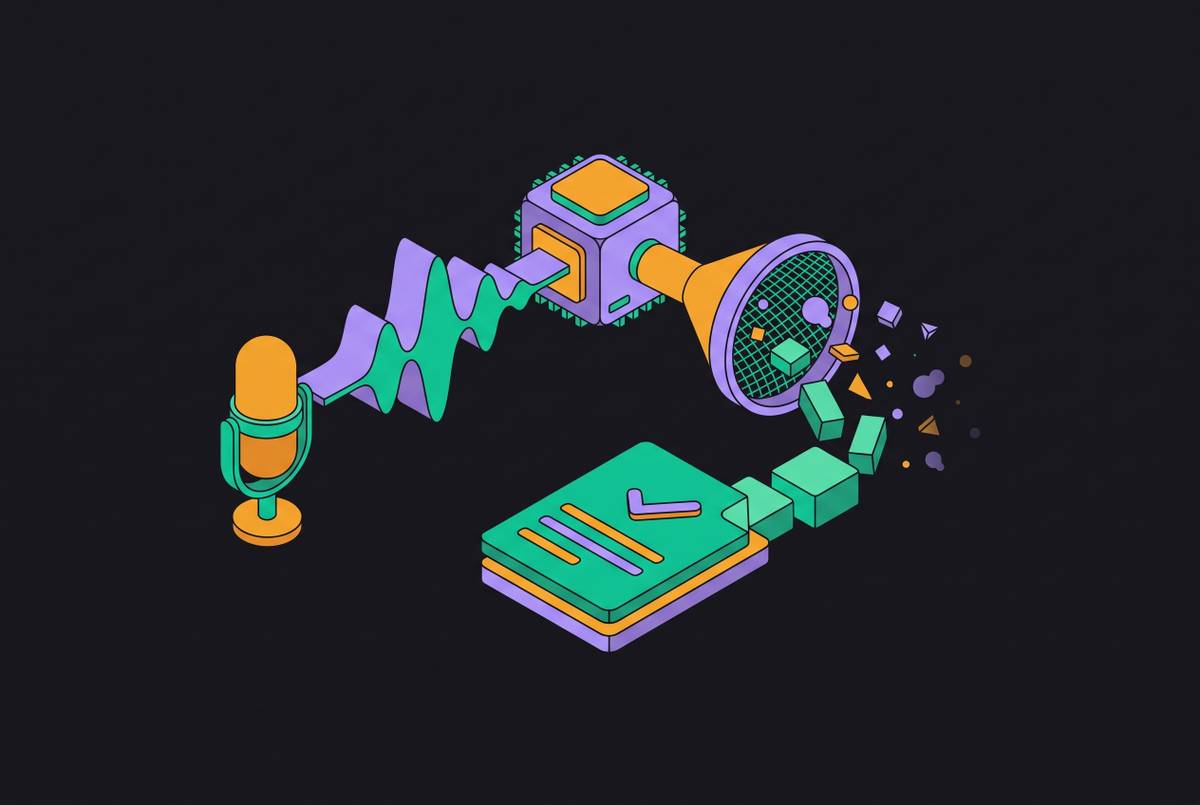
The meeting-note pipeline now has four steps, namely audio capture, speech-to-text, AI summarization, and sync to downstream tools. In most deployments, that pipeline runs largely without human involvement. Once its outputs enter CRMs, project trackers, and Slack, other work depends on them, even if the people in the meeting choose not to read them. A silent error can therefore become a corrupted CRM record, a task assigned to the wrong person, or a fabricated decision preserved in an archive.
That change makes oversight a question of how work is set up as well as which tool to buy. The relevant boundary is no longer the meeting tool itself, because its output travels beyond it. Review has to account for where information lands and what people do with it. Otherwise, a convenient way to capture a conversation becomes an unchecked source of instructions.
Where AI-generated notes fail, and why those failures are not random
Simular's 2026 hands-on review describes strong accuracy from leading tools on clean English audio. Accuracy degrades under identifiable conditions, including heavy accents and non-native English, shared room microphones, language switching, and domain jargon outside the model's vocabulary. These inputs can be recognized before anyone reads the summary.
Confident summarization of an ambiguous conversation can introduce a subtler error. A tool can produce a crisp decision when participants reached no decision at all. Unlike a missing word, that error manufactures certainty and can give downstream work a false premise. Speaker attribution creates another predictable failure when several people share a room microphone, because an otherwise accurate action item can land on the wrong owner.
A 2026 DEV Community article advises treating the action-item list as a draft to confirm. That is a useful distinction between rejecting AI output and assigning it an appropriate status. Meeting type, participant count, audio setup, language mix, and domain vocabulary are knowable before generation begins. Because those conditions are auditable in advance, review can start with triage.
Assigning risk tiers to meetings before review workflows can be designed
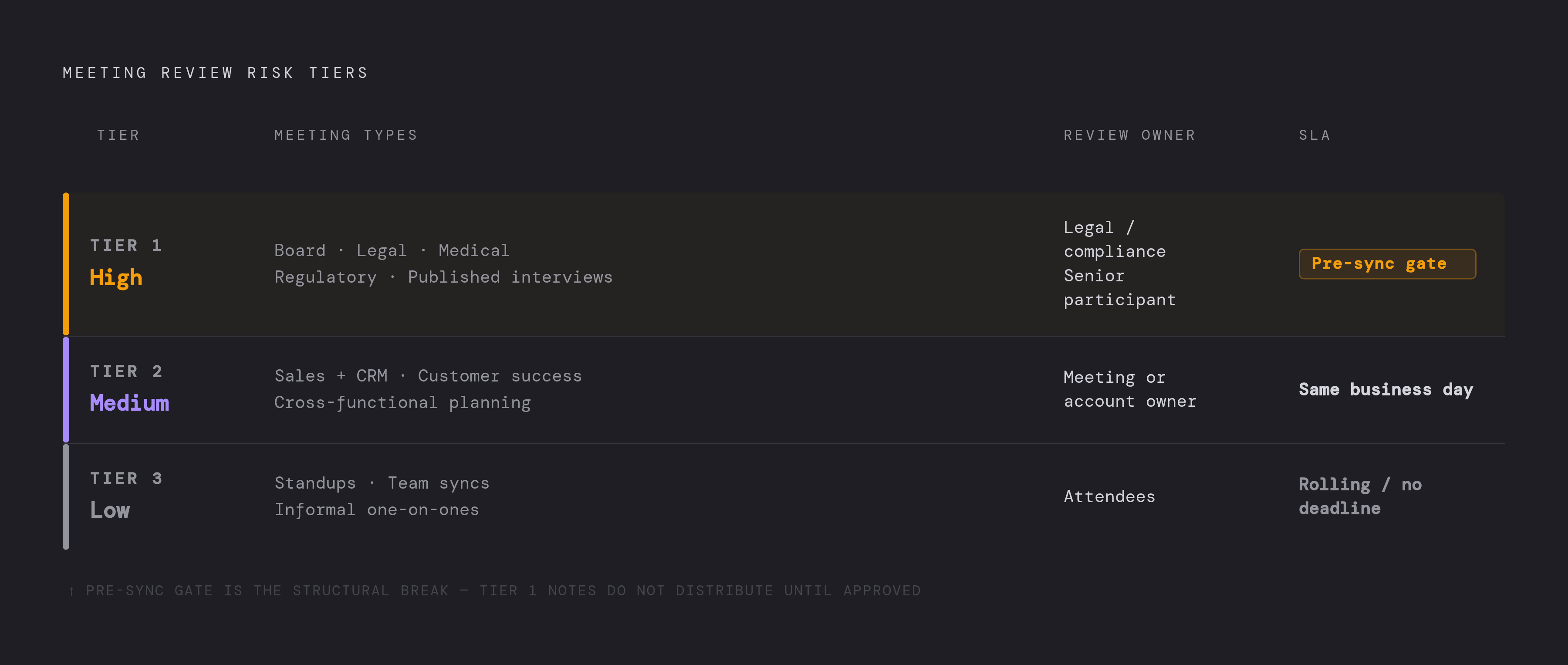
Meetings can be grouped into three tiers of risk, which are high, medium, and low. The tier should depend on which errors are likely and what could happen if they get through. Tier boundaries will vary by organization, so this model is a starting point. Its purpose is to allocate attention and define the review task before notes arrive.
High-risk meetings include board meetings, legal proceedings, medical consultations, regulatory reviews, and published interviews. In these settings, a fabricated decision or missed commitment can have external consequences. The notes therefore need a human approval gate before they are shared or sent through sync.
Medium-risk meetings include sales calls that lead to deal-field updates, customer success check-ins where people commit to next steps, and cross-functional sessions where people make plans. Their outputs enter CRMs and project tools, where errors can propagate, but targeted spot-checking of action items and attributed decisions is proportionate. Low-risk meetings include internal status standups, recurring team syncs, and one-on-ones with informal agendas. Participants already know what was said, so errors tend to be self-correcting and review can remain optional or exception-triggered.
Scheduled meeting type, calendar metadata, participant lists, expected language mix, and audio setup can feed an automated routing rule. The rule should lead to a review policy that specifies what requires attention.
Who should own review at each tier, and why centralizing it fails
The best person to catch a misattributed action item or fabricated decision is usually someone who attended the meeting. A participant has the conversational context that a centralized reviewer must try to reconstruct from a transcript. Centralizing review also makes the workload grow directly with meeting volume. Centralizing review creates either a bottleneck or rubber-stamping, neither of which provides dependable oversight for systems of record.
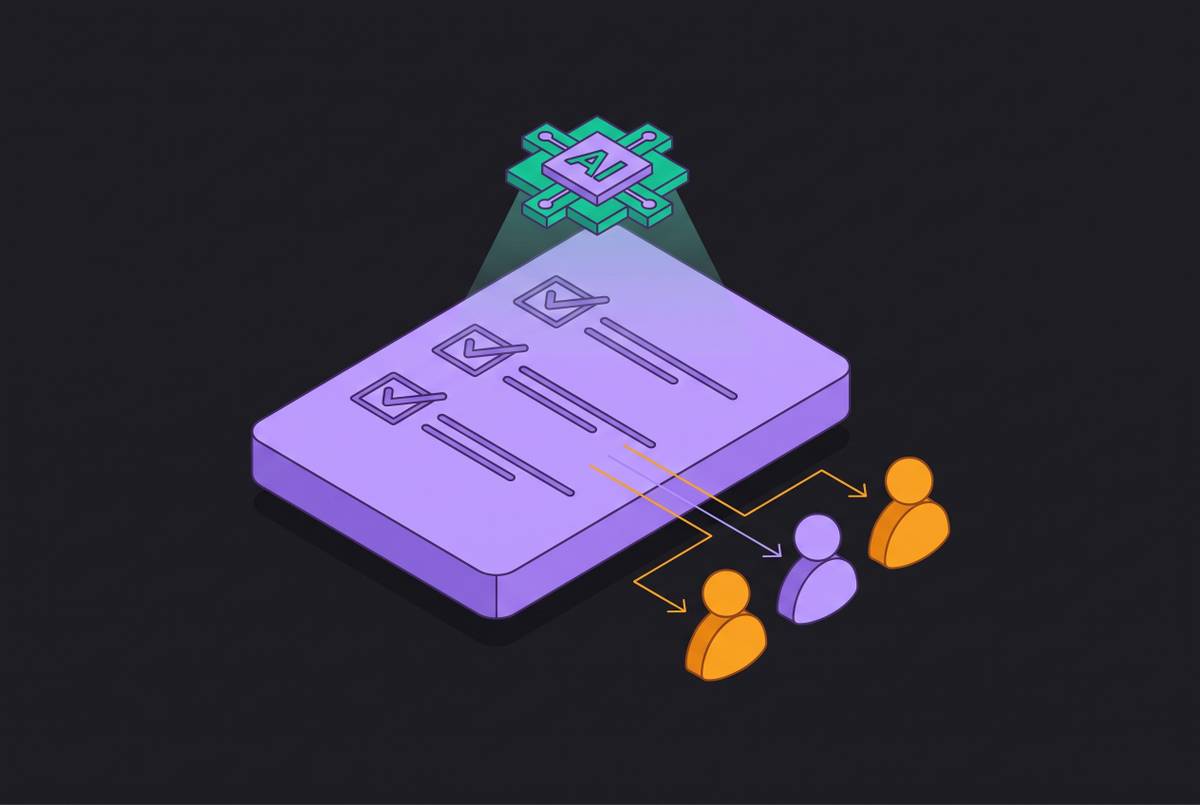
High-risk meetings need a designated reviewer, such as someone in legal or compliance or a senior participant, to approve notes before distribution. For medium-risk meetings, the meeting owner or account owner should review extracted action items and attributed decisions within a defined window before the CRM or project-tool sync finalizes. Low-risk meetings rely on the people who attended to flag what needs fixing in a comment, reply, or correction form.
Distributing this responsibility does add a task for participants. However, confirming the outputs that drive work is materially less effort than taking and organizing notes manually. The assignment is not to reconstruct the meeting but to catch consequential mismatches while its meaning is still familiar. Exception-driven review is limited to errors participants notice, leaving other errors in low-risk notes undetected.
What reviewers should actually check, and what they should skip
The review surface consists of the outputs that can change work elsewhere, including attributed action items, stated decisions, CRM field updates, and calendar commitments. Reviewers should check who owns each action and whether each stated decision matches what people in the meeting agreed. They should also check proposed CRM updates for factual errors or premature changes and identify sensitive material that should not be distributed. Calendar commitments also need a check because they bind people to do something beyond what is in the summary.
For medium-risk meetings, those checks provide a compact task that can be used in reviewer onboarding. A word-level transcription error that changes neither a decision nor an action item is generally not worth correcting at scale. Reading the full transcript by default defeats the effort savings that make distributed ownership workable.
High-risk review extends that scope to the accuracy of included direct quotes, the completeness of committed next steps, and omitted material context. A summary can repeat a decision accurately yet leave out context that changes its meaning.
Scope also provides a way to test the tiering policy. A participant reviewing three action items and two decisions takes two minutes, a fraction of twenty. If reviewers keep finding errors in low-risk meetings or keep finding none in high-risk ones, the tier assignments need to change. A feedback mechanism should surface that pattern so the framework directs effort according to actual correction needs.
How to route corrections back into the systems where notes have already landed
Finding an error is only the first part of correcting it. If a wrong deal stage has already reached a CRM, editing the note in the meeting tool does not update the CRM. The correction has to follow the integration path taken by the original output.
Manual re-sync is one available pattern. The reviewer edits the note and triggers another push to the connected system. This is simple, but it requires the reviewer to know the integration path and breaks down at volume. Its practical limit is the work needed to carry each correction beyond the meeting tool.
Another option is a structured correction field in the review interface. It captures what was wrong and the right value, then routes the correction through the same integration pipeline. This is more reliable than relying on a separate manual re-push, but the meeting tool must support it.
A third pattern is to correct the record directly in the CRM or project tool and flag it as an AI-correction event. This preserves the corrected state where work happens and creates an audit trail, but it severs the connection back to the source transcript. That trade-off matters because silent edits lose evidence about which meetings and conditions generate errors.
MCP-connected architectures extend the same problem to agent actions. If meeting data reaches an LLM through a connector and an AI agent has already acted on an incorrect note, changing the record may not be enough. A drafted email or filed task may also need to be revisited.
Building the review SLA and keeping the correction window short
The value of a correction falls as more work depends on the error. A misattributed task may already have generated a notification, reached the wrong person, and caused that person to act or not act. A wrong deal stage that goes unnoticed in an end-of-day pipeline review may already have shaped a forecast. Correcting the field does not automatically correct the conversation built around it, so the cost compounds.
The review SLA should follow the risk tiers. High-risk notes need approval at a pre-sync gate before they can be shared. Medium-risk corrections should be submitted within the same business day as the meeting, while low-risk corrections can be accepted on a rolling basis without a hard deadline. These windows serve an operational purpose, which is to limit the work that must be unwound.
The same-day window is especially important because participants can still remember what was said, making targeted review faster and more reliable. Reviewing notes in end-of-week batches can force reviewers to replay recordings when they can no longer remember enough to be sure of a correction. That recreates the manual effort the workflow was intended to remove. A post-meeting notification or calendar follow-up that surfaces the summary brings it directly to the owner for review, eliminating a separate search.
Using correction patterns to improve AI output over time, not just fix individual errors
Corrections are worth more when they are tracked in a consistent way as well as used to fix each error. Tagging them by meeting type, audio condition, language, and error category reveals where quality is degrading. The relevant categories include misattribution, fabricated decisions, missing action items, and wrong CRM fields. Taken together, the corrections show which input conditions lead to errors and which tier assignments need to change.
For example, correction rates for medium-risk sales calls may be as high as those for high-risk board meetings. That pattern provides evidence to raise the sales-call tier and ask the tool vendor about custom vocabulary, speaker profile tuning, or audio setup changes. It turns a general complaint about accuracy into a defined area for improvement.
Custom vocabulary and glossary features, where tools support them, can cut transcription errors caused by jargon without a person having to check each case. Correction patterns identify where that configuration work is likely to pay off. The same evidence can show where review still needs to be strict. Improvement is therefore a feedback loop between human corrections, tool configuration, and review policy.
That loop matters most when meeting data becomes organizational memory. A queryable archive full of fabricated decisions is worse than no archive, because its usefulness depends on the accuracy of what it preserves. The goal is a workflow that becomes lighter as configuration improves and recurring errors decline. Human review then concentrates on the decisions and commitments that still need judgment, instead of spreading manual effort across every meeting.